If Any of These Sound Like You, You're In The Right Place
These aren't random complaints. They're specific signals, and they've been trying to get your attention for longer than you realise. The woman who handles crises at work but can't put a dish in the dishwasher. This is not weakness. This is overload.

Why Generic Stress Advice Fails This Audience, And What Works Instead
Two concepts make this guide categorically different from anything else in the stress and burnout space.
She has tried. The baths. The walks. The meditation that produces nothing except an acute awareness of how loud and relentless the mind is, followed by the conclusion that she is bad at meditating rather than the conclusion that her nervous system is overloaded.
None of it is wrong. Some of it helps, briefly, at the margins. But none of it addresses the actual problem, which is not that she needs better relaxation techniques. It is that she has lost her felt sense of what she is trying to relax toward.

The Invisible Stress Stack
You're not simply "bad at coping." You're carrying an invisible accumulation of emotional labour, mental load, people-pleasing, guilt around rest, sensory overload, and chronic responsibility that has built so quietly and for so long that it has become indistinguishable from who you are. The symptoms look like personality. The stack keeps growing.
The Signal to Soothe Method
Instead of a new routine, a daily habit, or a demanding programme, this method asks only three things: spot the signal, understand what type of overload it points to, and apply one small, specific relief action matched to that overload. Not generic. Not overwhelming. Targeted. Works even when you're already exhausted, because it was built specifically for that state.
Three Steps. Built For The Life You Actually Have.
Recognise the hidden stress sign for what it is. Not a character flaw, not evidence of weakness, not just tiredness. A specific, readable signal your nervous system has been sending. The guide gives you 300 of them, named with enough precision that you'll find yourself stopping and thinking: I thought that was just me.
Identify which category the signal points to. This step is where self-blame becomes information. When you know you're dealing with sensory overload rather than emotional depletion, the response changes entirely. You stop fighting the wrong thing.
Apply one small, targeted relief action appropriate to the specific overload. Not a new daily ritual. Not a 30-minute routine. One specific thing, matched to what the signal is actually pointing to, that you can do right now, in the life you actually have.
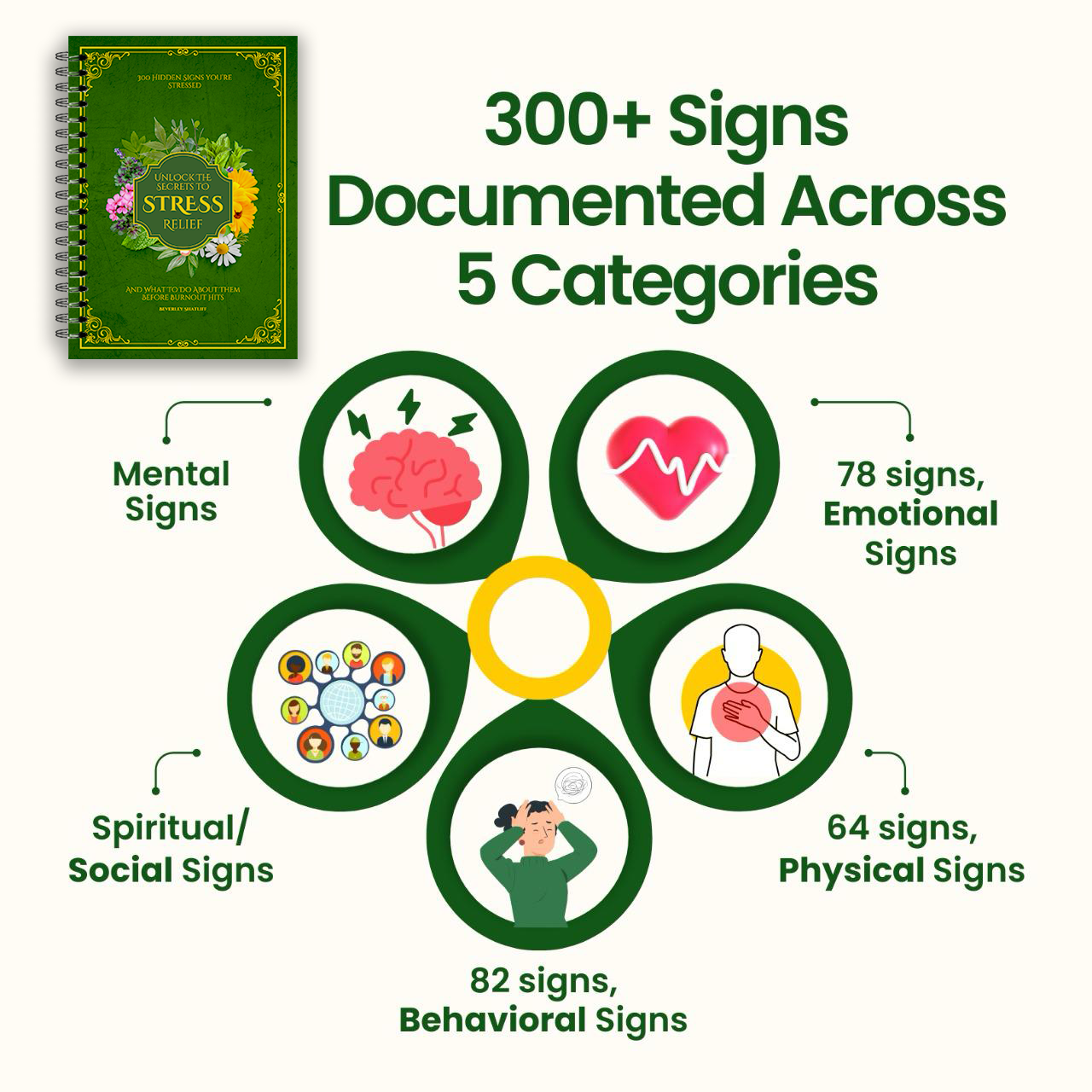
300 Signs. Five Categories. One Pattern.
Chronic stress doesn't confine itself to one area. It spreads through everything. The guide maps it across all five categories, so you can finally see the whole picture instead of treating isolated symptoms one by one.
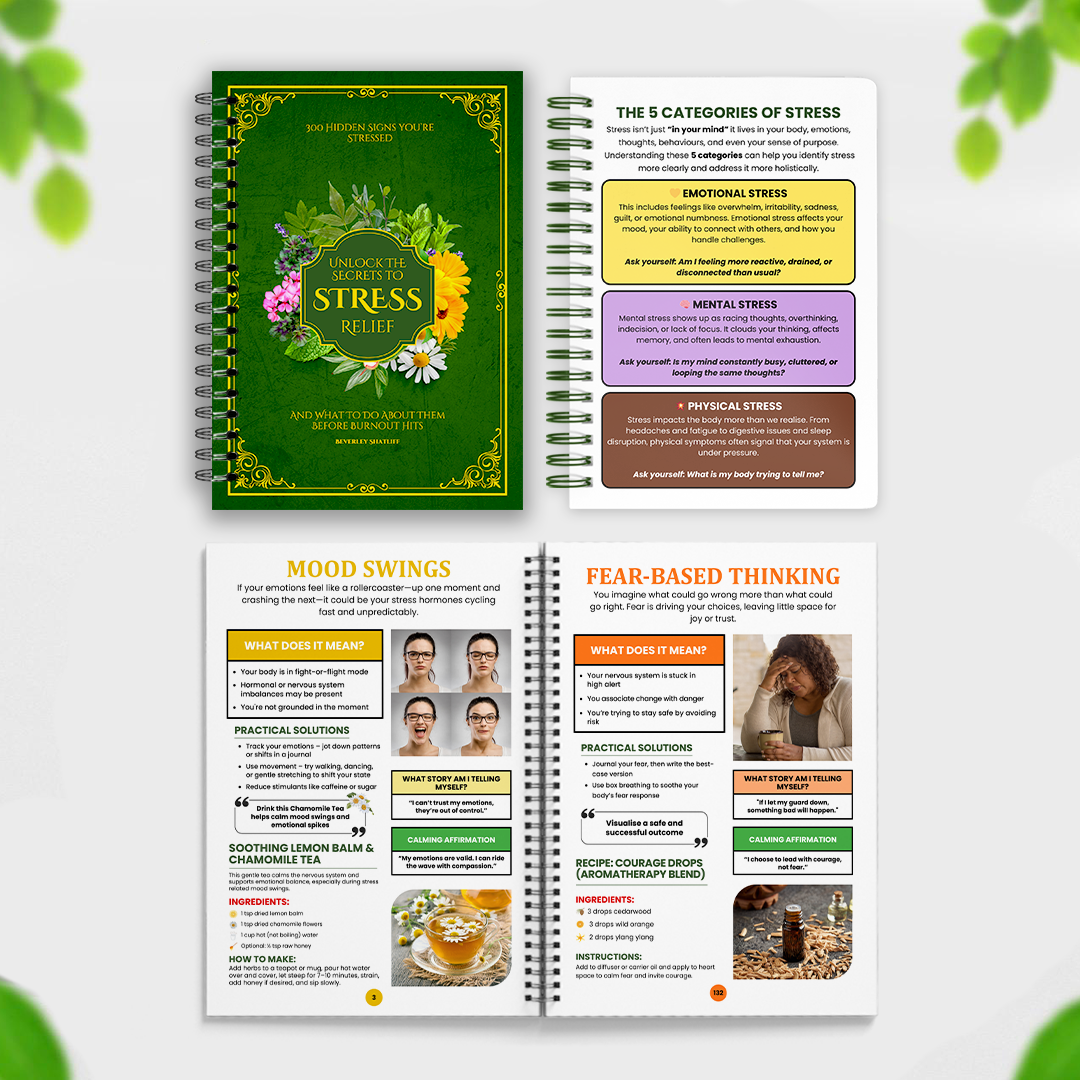
Unlock The Secrets To Stress Relief: 300 Hidden Signs You're Stressed And What To Do About Them Before Burnout Hits
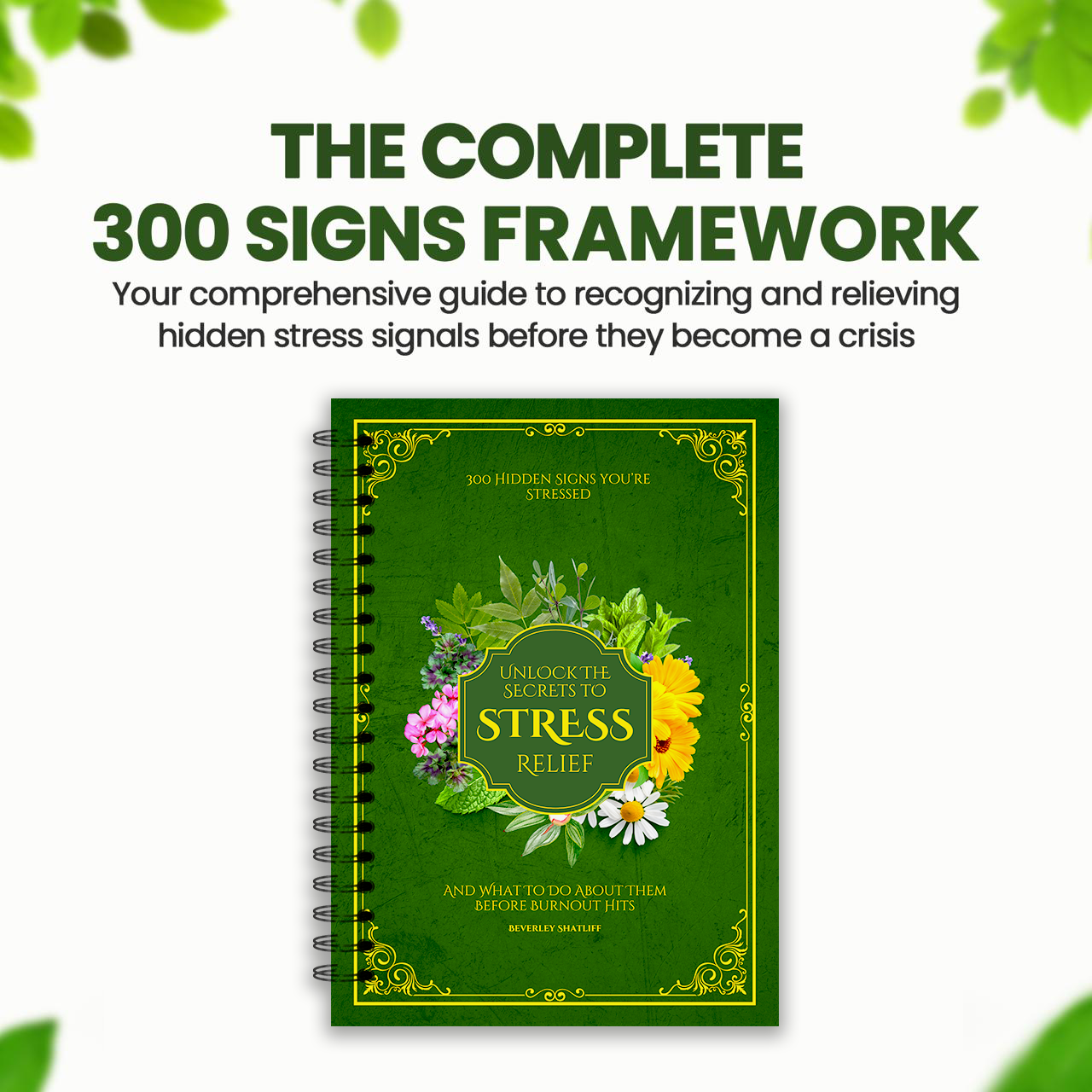
Written by Beverley Shatliff, Stress Management Specialist, Advanced Holistic Practitioner, and Reiki Master Teacher with 25 years of experience in holistic health. Featured in International Business Weekly, Entrepreneur's Weekly, and Brainz Magazine.
This is not a general wellbeing guide. It was built specifically for the woman who is still functioning, still managing, and still questioning whether what she's experiencing is "bad enough" to deserve attention. It doesn't add to your list. It helps you finally read the list your body has been keeping for years.
Brain fog, lost words, the mind that loops endlessly but can't actually think clearly. Decision fatigue. The inability to start things that used to be effortless.
Irritability, flatness, guilt every time you rest, snapping over tiny things and the shame that follows. Feeling empty while still performing connection.
Exhaustion sleep doesn't fix. 3am wake-ups. Jaw clenching, tension headaches, noise becoming intolerable. The body that's been carrying this longer than you knew.
Avoidance, scrolling instead of resting, the texts left unanswered not from disinterest but from depletion. Procrastinating on things that should be simple.
The thinning of presence with people you love. Feeling disconnected from your sense of purpose. The hollowness that's difficult to name. The fear that this might be permanent.
Each of the 300 signs is connected to a plain-English explanation of what type of overload it points to, and to a specific Signal to Soothe relief action matched to that overload. Not one-size-fits-all wellness advice. Specific responses to specific signals, in the specific form your stress has taken.
The Core Guide Plus Five Resources Built For The Gaps It Can't Cover
Each bonus was designed for a specific moment or situation the main guide doesn't address. Several readers say the bonuses are where the most immediately useful material lives.
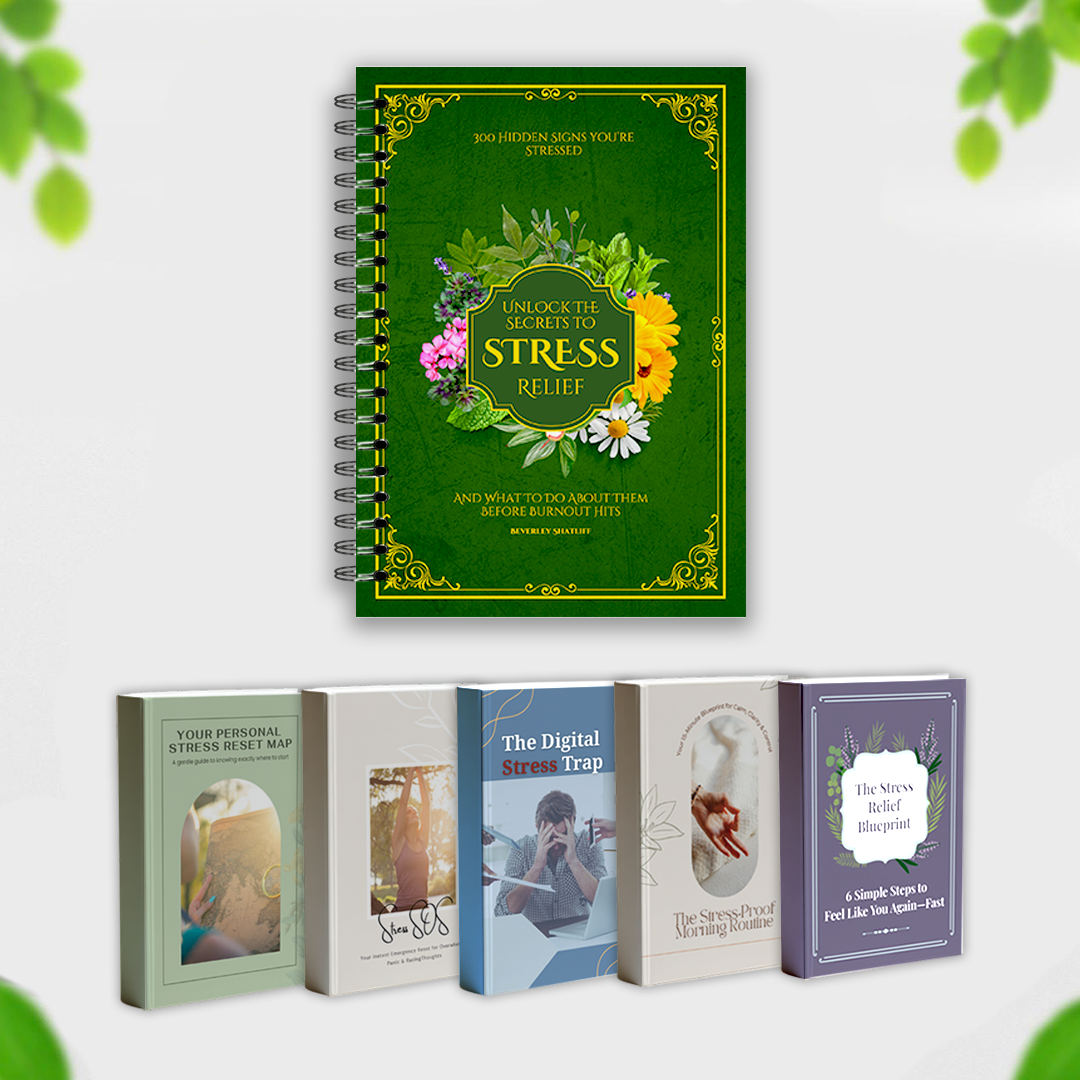
For a woman whose stress has spread across multiple areas of her life, knowing where to begin is itself a challenge. This map helps you identify which category is most dominant right now, so your first step is specific and directed rather than a reaching-toward-wellness that lands nowhere.
For the moments that don't wait for a calm morning. A short, practical toolkit for when you're already at the threshold, already feeling the pressure rising, already aware that one more small thing could tip you. Not a routine for when you're calm. Built for the absence of it.
One of the most underacknowledged contributors to hidden overload. The constant low-level stimulation of being always reachable. This guide addresses it practically, without requiring you to disappear from your life.
Not 5am. Not 90 minutes. A genuinely realistic morning framework built around the actual life of a woman who has already failed at every idealised routine she's attempted, and who needs her nervous system set up for the day rather than immediately thrown into reactive mode.
The distilled version. If you need somewhere to begin and you need it now: six steps, in the right order, that move you from the fog of not-quite-knowing-what's-wrong toward the first tangible sense of feeling like yourself again.
Get The Complete Guide + All 5 Bonuses
Show Me The Price & Bonuses £27 introductory price · 365-day money-back guaranteeThis Guide Is Right For Some Women. Not Right For Others. Here's How To Know.
- You're still functioning but feel privately unlike yourself
- You're exhausted but can't properly relax
- You dismiss your own symptoms because you're "not bad enough"
- You want to understand what's happening before it gets worse
- You need something that works inside your real, busy, imperfect life
- You're done with generic self-care advice that adds to your list
- You want clarity, not another routine to fail at
- You're in a mental health crisis, please seek professional support
- You want a complete therapy replacement
- You're looking for a demanding programme requiring daily commitment
- You want generic mindfulness tips you've already encountered everywhere
- You expect a guide to remove the stressors from your life
- You prefer spiritual or metaphysical framing over practical methods
If this guide can't honestly help you, we'd rather you know that before you buy. The 365-day guarantee exists precisely for this reason, but we'd prefer you don't need to use it.